Research
Critical, affective and visceral examinations of tourism mobilities in places of socio-political turmoil — to deepen understanding of societies and inform social policy.
Defining the field
Affective tourism is the way affects, emotions and feelings are accessed, felt, experienced and performed in encounters between touring bodies and places.
Themes

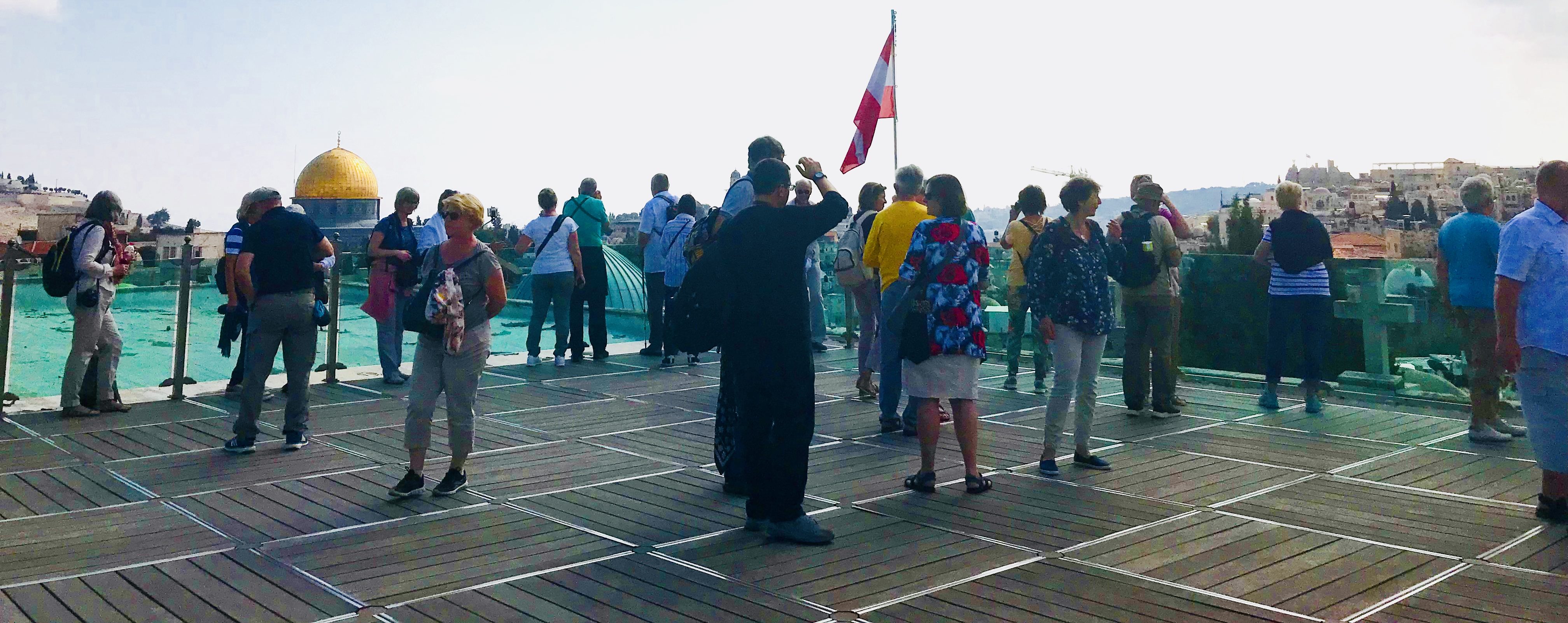
How tourism exists in spite of ongoing conflict, and how affective and emotional experiences shape the identity of conflict places.

Travel to places of atrocity, death and disaster, theorised through cultural theories of affect and emotion together with psychoanalysis.

Contributing to social policy that promotes inclusive societies valuing peace and wellbeing, and that accepts diversity and difference.
Funded projects
Innovational Research Incentives Scheme (Veni), Dutch Research Council (NWO)
Dark tourism — travel in places of atrocity, conflict, death and disaster — is a complex phenomenon with cultural, socio-political and economic implications at local, regional and international levels. Building on prior research in Jordan and short stays in the neighbouring West Bank, this project investigates dark tourism in areas of active or simmering socio-political conflict, based for eight months in Bethlehem across two major tourism seasons.
The aim is threefold:
Findings contribute novel cross-disciplinary methodologies and a critical theoretical approach to dark tourism — strengthening the sub-field and improving the planning and development of tourism in conflict-affected areas in more sustainable ways.
Rosalind Franklin Fellowship, University of Groningen, the Netherlands (2013–2017)
A critical research agenda focused on affective and emotional engagements in times and places of turmoil, framed within tourism contexts — exploring spatial and societal transformations through tourism mobilities in places of socio-political turmoil.
Objectives:
Books, peer-reviewed articles and chapters spanning dark tourism, affect, emotion and the geographies of conflict.