The feelings, emotions and affects transacted in tourist places — especially in regions of ongoing socio-political turmoil and conflict.
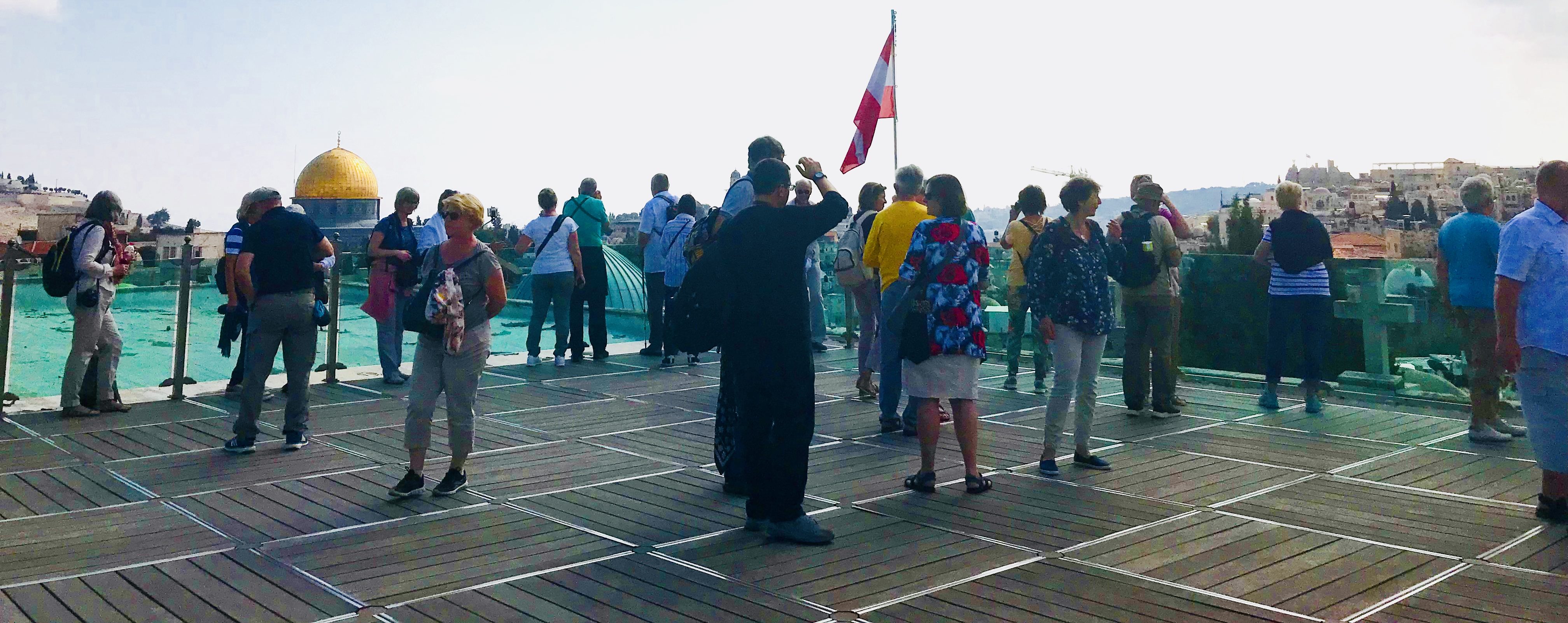
Research from Jerusalem, Jordan and the Palestinian West Bank to eastern Europe, on how emotion shapes the way we travel through troubled places.
The concept
Affective Tourism is a concept proposed by Dorina-Maria Buda in her book of the same title — the ways in which affects, emotions and feelings are accessed, felt, experienced and performed in encounters between touring bodies and places.
Drawing on emotional and psychoanalytic geographies, the work asks how tourists are moved by, and move through, places of turmoil — and how those encounters can contribute to understanding, negotiation and peace.
“In-depth understandings of the role of emotions in such places can contribute to conflict negotiation and peace building.”

Fieldwork, the West Bank — tourism at the separation wall.
Research
Ethnographic research across destinations in ongoing socio-political conflict — North Korea, Iran, Israel, Jordan, the Palestinian West Bank and eastern Europe.

How destinations function as tourist places while in the midst of socio-political conflict, occupation and unrest.

Travel to sites of death, disaster and memory — and the emotions and affects that circulate within them.

Heritage and hospitality as routes toward empathy, negotiation and peace-building in divided places.

About
Professor of Tourism and Hospitality at Edge Hotel School and Dean Research for the Faculty of Arts and Humanities at the University of Essex. A TEDx speaker, her work examines the interconnections between affect, emotion and psychoanalysis in the geographies of tourism.
Publications
Latest & ongoing
Student fieldwork in Jordan and the Netherlands, doctoral supervision, museums for peace, media interviews and outreach. For current activity and reflections, follow along on LinkedIn.